The workshop
About Aurea Displays
Aurea Displays began as a personal project: creating historically inspired figures that could give ancient coins a more meaningful way to be displayed. What started with a few designs made for our own collection gradually grew into a small workshop in the Netherlands, creating original 3D-printed displays for collectors around the world.
Each figure is designed with history in mind, drawing inspiration from surviving busts, statues, coins, and other historical references. Most pieces are created primarily as coin holders, with carefully sized recesses made for individual coins, but they can also be enjoyed simply as decorative figurines. The PLA surface can be left in its original finish or primed and painted by hand, making each piece a small creative project in its own right.
From the first digital model to printing, inspection, and packing, every display is developed and finished in-house with the aim of bringing together ancient history, collecting, and modern 3D printing.
How a display is made
01
Intake
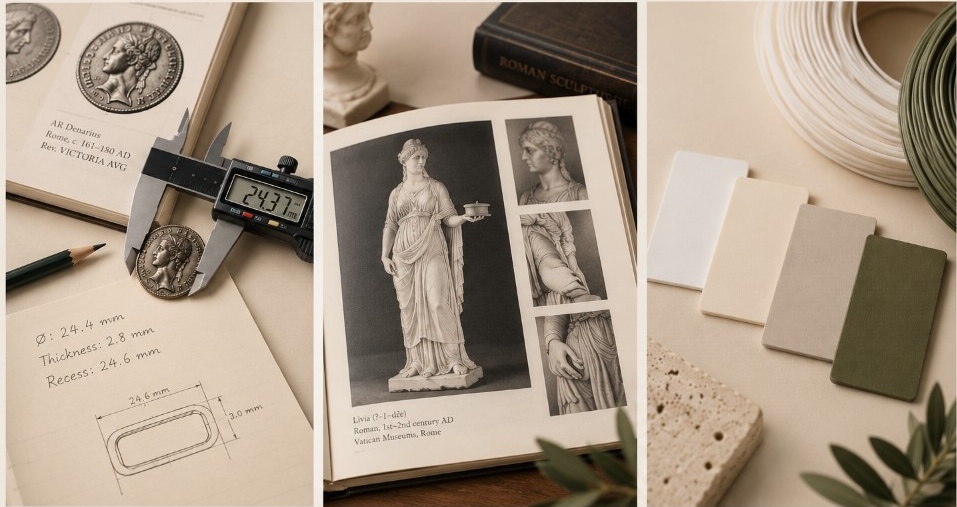
Every display begins with a conversation. For catalog orders, we confirm the coin measurements, size, and PLA colour with the customer before production starts, making sure the seat dimensions are correct and the piece matches what they have in mind.
For custom requests, this step goes further: we review the figure, discuss proportions, pose, and any special requirements, and agree on a quote before any design work begins. Nothing moves forward until both sides are satisfied with the plan.
02
Design
Every display starts with a 3D model. The figure is sculpted digitally — proportions, pose, and base are all adjusted to suit the coin it will hold.
The coin seat is cut precisely from the measurements you provide: diameter and thickness. The coin rests in the recess without glue, clips, or pressure.
03
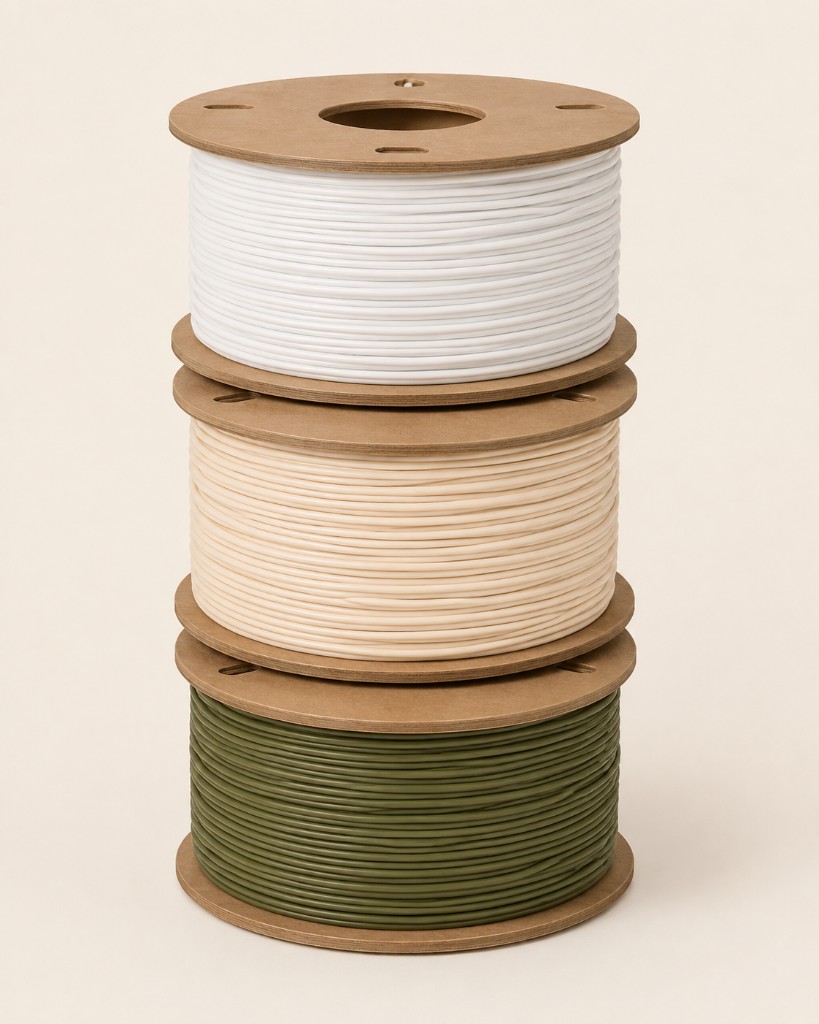
The finished model is prepared for printing and produced in PLA, a plant-derived thermoplastic commonly made from renewable resources such as corn starch or sugarcane. It gives the displays a clean matte finish while remaining lightweight and durable.
The coin rests in a precisely sized, dry recess without glue or adhesive. PLA contains no PVC or added plasticisers, making it a suitable material for displaying silver, gold, bronze, and copper coins under normal indoor conditions.
04
Inspect & Deliver
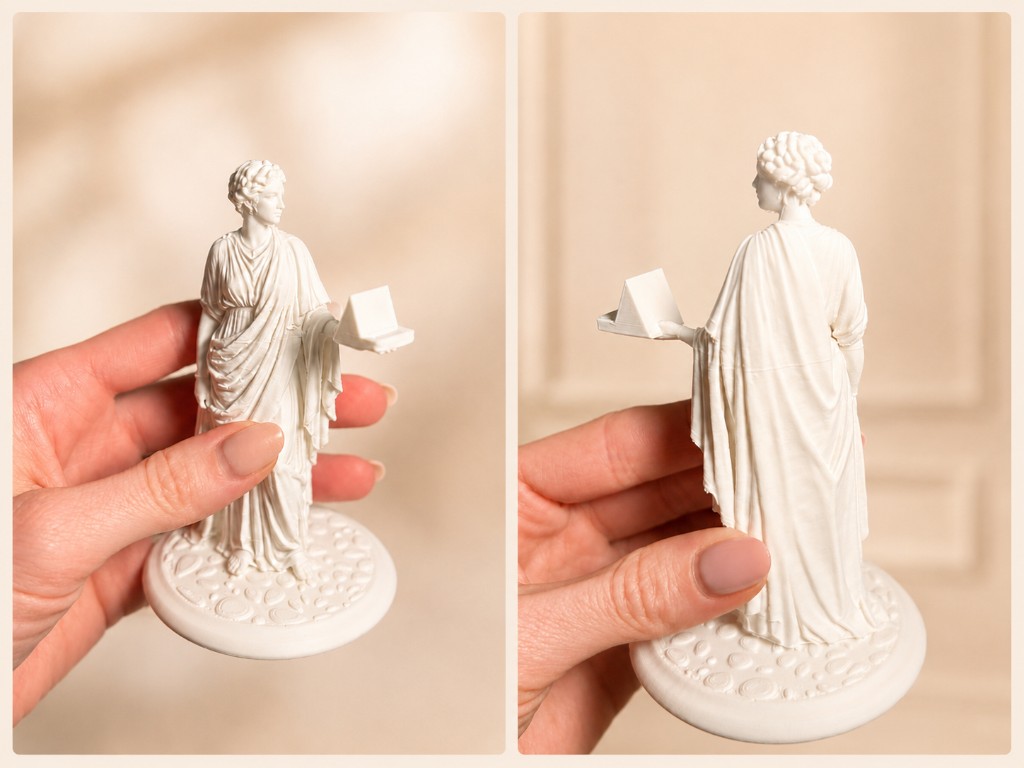
Each display is carefully checked by hand before packing. The print quality, stability, and coin fit are inspected to make sure the piece is ready to use and present well.
Once approved, the display is packed securely and dispatched from the Netherlands. Made-to-order pieces typically require around 10–14 days before shipping.
How to order
Shop the collection
Browse our collection of ancient coin displays here on the Aurea Displays website, from historical figures to classical-inspired designs. You can also view the available pieces directly on Etsy, including current sizes and PLA colour options.
All orders are placed and securely processed through Etsy, including payment, order confirmation, and shipping details.
Custom requests
Looking for a specific historical figure, a different display size, or a stand designed around an unusual coin? Custom requests are made individually: the proportions, pose, coin recess, and overall design adapted to your idea.
Fill in the request form with the figure, dimensions, coin measurements, and any references. I'll confirm the details and provide a quote before any design work begins.